———- Forwarded message ———
De : The Resistance Archives <resistancearchives@substack.com>
They Are Not Dead
On Islamic resistance, martyrdom, and the theology of witness
Resistance Archives and A. Tahrir
Muhammad Zaki Hamad in the tunnels of Gaza. Scholar, mujahid, shahid.
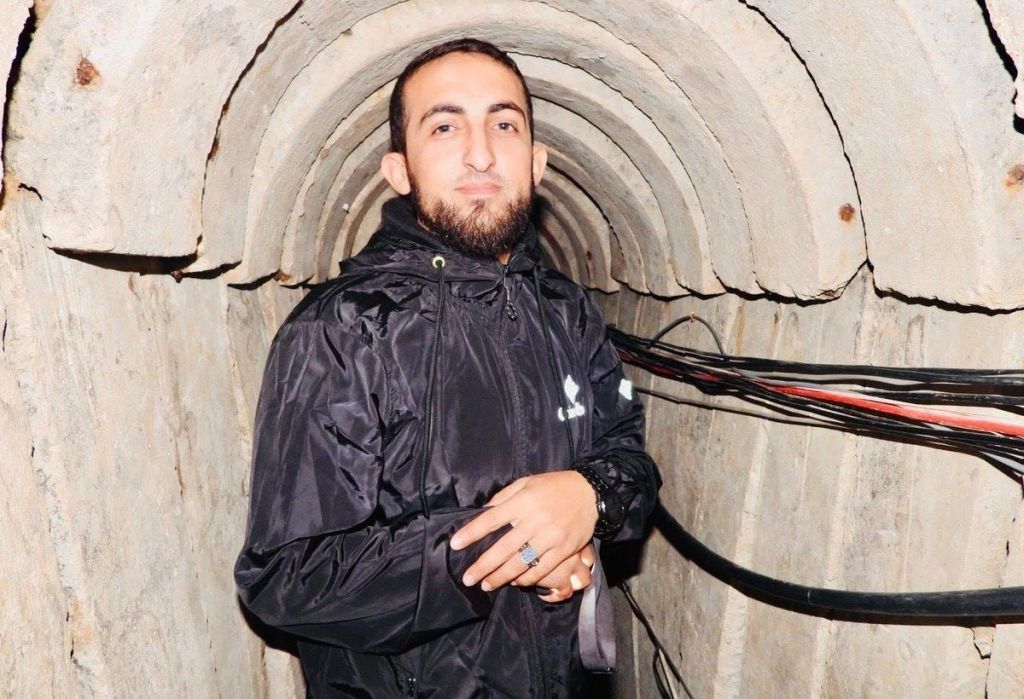
In July 2025, Muhammad Zaki Hamad achieved martyrdom in Beit Hanoun, northern Gaza. He was a deputy commander of a resistance unit. But he was also a man who had memorized the entire Quran before he was a teenager. Who had spent years traveling across Gaza to sit with scholars, studying tafsir, fiqh, and hadith. Who ran Quran memorization circles for young people between military operations. Who donated portions of his own modest salary, month after month, to fund the religious education of others. Who stayed up until fajr reading by candlelight during power cuts, preparing lessons he would deliver the next morning before returning to the tunnels. Who wrote a book, Under the Banner of the Flood, a serious and theologically rigorous book, from inside the tunnels, weaving Quranic verses with firsthand accounts of combat, because he believed that knowledge and resistance were not two separate callings but one.
To understand what produced a man like Muhammad Zaki, what tradition shaped him, what theology moved him, is to understand something essential about Islamic resistance that most analysis, even sympathetic analysis, tends to miss.
This article aims to bridge an existing gap in our understanding of Islamic resistance. Even those who stand firmly in support of these struggles often analyze them almost entirely through a material lens of occupation, displacement, foreign intervention, regional complicity, while leaving untouched the question of what actually moves people to fight.
What Islam Says About Oppression
“Permission [to fight] has been given to those who are being fought, because they were wronged. And indeed, Allah is competent to give them victory. ˹They are˺ those who have been expelled from their homes for no reason other than proclaiming: “Our Lord is Allah.” Had Allah not repelled ˹the aggression of˺ some people by means of others, destruction would have surely claimed monasteries, churches, synagogues, and mosques in which Allah’s Name is often mentioned. Allah will certainly help those who stand up for Him. Allah is truly All-Powerful, Almighty.” (22:39-40)
These verses were revealed over fourteen centuries ago. They have never stopped being relevant. This was not a permission granted for one moment in history, it was a theological principle established at the foundation of the faith: that those who are wronged, expelled, and persecuted have divine sanction to resist. Resistance to injustice is not a political position grafted onto Islam. It is built into its foundations.
That word, “wronged”, carries in its Arabic root something larger than a single injustice. Zulm, oppression, the violation of what is right and divinely ordered, appears in the Quran over 280 times.
The Prophet Muhammad ﷺ, to whom the Quran was revealed, is the complete role model for Muslims. His life, his leadership, and his example are the standard by which Muslims understand how to live. From the earliest days of revelation, the Muslim community in Mecca was a persecuted minority, attacked continuously by the dominant power structure of their time. The hijra, the migration from Mecca to Medina, was not flight. It was strategic repositioning, a calculated move to build the foundation from which Muslims would inevitably return and prevail. The very foundations of early Islam is a resistance story, and Muslims carry that origin in their bones.
“And what is [the matter] with you that you fight not in the cause of Allāh and [for] the oppressed among men, women and children who say, ‘Our Lord, take us out of this city of oppressive people and appoint for us from Yourself a protector and appoint for us from Yourself a helper’?” 4:75
Notice that the Quran does not issue a command here. It poses a question, one that assumes the answer is already known. And embedded within the verse are the voices of the oppressed themselves, crying out for deliverance. The believer is not being asked to fight in the abstract. They are being asked to respond to a people’s call.
But the Quran does not only speak to those who fight. It entirely reframes the way we think about death in that cause.
“And never think of those who have been killed in the cause of Allāh as dead. Rather, they are alive with their Lord, receiving provision, rejoicing in what Allāh has bestowed upon them of His bounty, and they receive good tidings about those [to be martyred] after them who have not yet joined them – that there will be no fear concerning them, nor will they grieve.” 3:169-170
Shahid, Shahada, Shahada — The Witness
The term shahid is not simply someone who died or was killed. The word shares its root with shahada, the declaration of faith (“I bear witness that there is no God but God”), and with the act of witnessing and testifying to truth. To die in resistance is to testify with the most total act available to a human being. The martyr is a witness in the same way a prophet is a witness. Martyrdom is not about the glorification of violence or death for its own sake. It is a theology of witness, the belief that some truths can only be testified to with one’s life. This is why the Quran repeats: “And do not say about those who are killed in the way of Allāh, ‘They are dead.’ Rather, they are alive, but you perceive [it] not.” 2:154. The witness remains.
The theology of witness found its most enduring human expression in 680 CE, when Imam Husayn ibn Ali, the grandson of the Prophet ﷺ, chose to stand at Karbala knowing he would not survive. Outnumbered alongside his family and companions, he was offered every opportunity to submit or flee. He refused. Submission to Yazid’s illegitimate authority would have been a betrayal of everything the faith stood for. And so he stood. His martyrdom, and the martyrdom of those with him, was not a defeat. It was a testimony, an act of witness that has reverberated across the Muslim world for over 1400 years. While Karbala holds particular spiritual depth within the Shia tradition, its lesson is universal. It belongs to every Muslim who understands that some truths cannot be abandoned, that illegitimate power must be named, and that the one who stands anyway, knowing the cost, is not defeated. They are witnessed. They are not dead.
This is why the story of a man like Muhammad Zaki today is so profound. In a time where Islam and its sanctities are under attack, where many of us have been sold a hollowed out version of the faith reduced to ritual and routine, or have drifted into individualism, the people of Gaza remind us what it looks like to embody this deen completely. We struggle with the basics while fighting each other over the rest. They are dying on its foundations. Muhammad Zaki is a modern embodiment of what witnessing truly means. He wrote about martyrdom from inside the tunnels. Then he became one. His death was not a tragedy that interrupted his life’s work. Within this tradition, it was the completion of it.
The Colonial Arc
This theology, however, was one that moved through history and produced resistance movements across the Muslim world long before 1979, long before Hamas, long before any of the frameworks Western discourse reaches for. Abd al-Qadir al-Jaza’iri led a sophisticated armed and scholarly resistance against French colonialism in Algeria in the 19th century, simultaneously a military commander and a jurist who understood his struggle in entirely Islamic terms. The Mahdist movement in Sudan resisted both Ottoman-Egyptian and British rule under an explicitly theological banner. The Senussi of Libya sustained decades of resistance against Italian colonialism rooted in their Sufi tradition, led by Omar al-Mukhtar, a scholar of Quran who taught between battles and was publicly hanged by the Italians at 73, unbowed to the end. The Khilafat Movement in India mobilized pan-Islamic anti-colonial solidarity, demonstrating that this tradition was never merely local. It crossed borders because it drew on a universal framework. These were not movements that happened to be Muslim. Islam was their organizing framework, their moral language, and the source of their steadfastness and strength. The colonial powers killed their leaders and scattered their movements. They could not kill what those movements drew from.
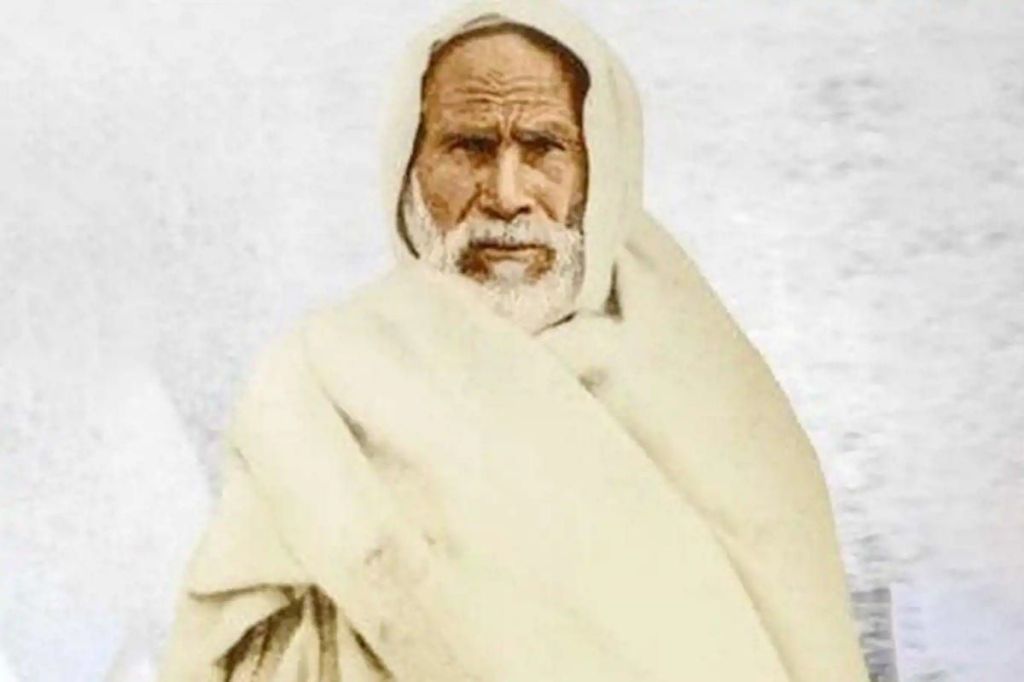
Omar Al Mukhtar St – Marhaba Qatar
Omar al-Mukhtar. Scholar, commander, shahid. Libya, 1931. (Colourized)
As the 20th century unfolded, two thinkers in particular gave this tradition its modern revolutionary form. Ali Shariati, an Iranian intellectual deeply shaped by Fanon and Third World anticolonial theory, synthesized Islamic theology with the language of liberation, arguing that Islam was not a religion of passive submission but of revolutionary transformation. Sayyid Qutb, the Egyptian scholar and Muslim Brotherhood thinker, reframed the struggle against Western imperialism and its client regimes in Quranic terms, arguing that zulm had taken on a new face and demanded the same response it always had. Both thinkers, from different angles and traditions, did the same essential thing — they showed that the theology was not medieval. It was alive and it was speaking directly to the present.
When European colonialism eventually gave way to American-backed imperialism, the tradition did not need to reinvent itself. It recognized the same structure wearing different clothes.
The Present
Today that tradition is alive across the Muslim world. Most visibly in Palestine, where the ongoing nakba is the most unresolved expression of zulm in the modern era. Where anti-colonial and anti-imperial logic converge in one open wound. In Lebanon, where Beirut is being carpet bombed and Hezbollah is fighting fiercely against the same occupation forces. In Yemen, where the Houthis have positioned their struggle against American and Israeli intervention within the same framework. In Iraq, where factions of the Popular Mobilization Forces draw on the same lineage. In Iran, currently fighting an existential war of survival against American-Israeli imperialism. These are not isolated phenomena. The enemy is one, the framework is one, and the tradition they draw from is one, rooted in the same theology, the same refusal to submit to zulm. The same insistence, across every front, that those who fall in this cause are not gone.
Closing
The material conditions matter. The occupation, the siege, the bombs, the land theft. All of that explains the lived reality. But conditions alone don’t explain what we saw in Muhammad Zaki. A man in a tunnel, writing theology between raids, teaching until the very last moment, not because he thought the world was watching but because he had something to offer before Allah and he was going to offer it completely. They don’t explain why generation after generation continues to resist knowing the cost. Something deeper is moving here. A belief that tells people their resistance is written into the fabric of creation. That the oppressed have a claim before God. That the one who gives everything in this cause does not die. They are witnessed.
You don’t have to share this faith to take it seriously. But you do have to take it seriously. If you want to understand what is happening right now in Gaza, in Lebanon, in Yemen, in Iran, if you want to understand what produced a man like Muhammad Zaki, you have to go where the analysis usually stops. You have to sit with what he knew. They are not dead.
 La CoUrBE du CUBE